If you are drawn to DC Ranch, you are probably looking for more than square footage or a view. You are looking for a home that feels grounded in North Scottsdale, with architecture that respects the desert while still delivering luxury, comfort, and presence. In a community this carefully planned, style is not random, and understanding the architectural language can help you buy or sell with more confidence. Let’s dive in.
Why architecture matters in DC Ranch
DC Ranch is a 4,400-acre master-planned community in North Scottsdale with four villages, 26 neighborhoods, roughly 2,800 homes, and about 7,000 residents. The first home was completed in 1997, and the community was shaped as a desert-sensitive environment rather than a collection of unrelated luxury enclaves.
That planning vision still shows up in the homes today. Architecture in DC Ranch is guided by regional history, natural materials, and forms that fit the Sonoran Desert landscape. Even when a property feels more modern, it is typically meant to remain visually connected to the land around it.
The design language behind luxury homes
One of the reasons DC Ranch feels so cohesive is that the community follows clear architectural standards. Planning sources describe 14 acceptable styles or style variants, along with design rules that influence massing, rooflines, garage placement, and outdoor living features.
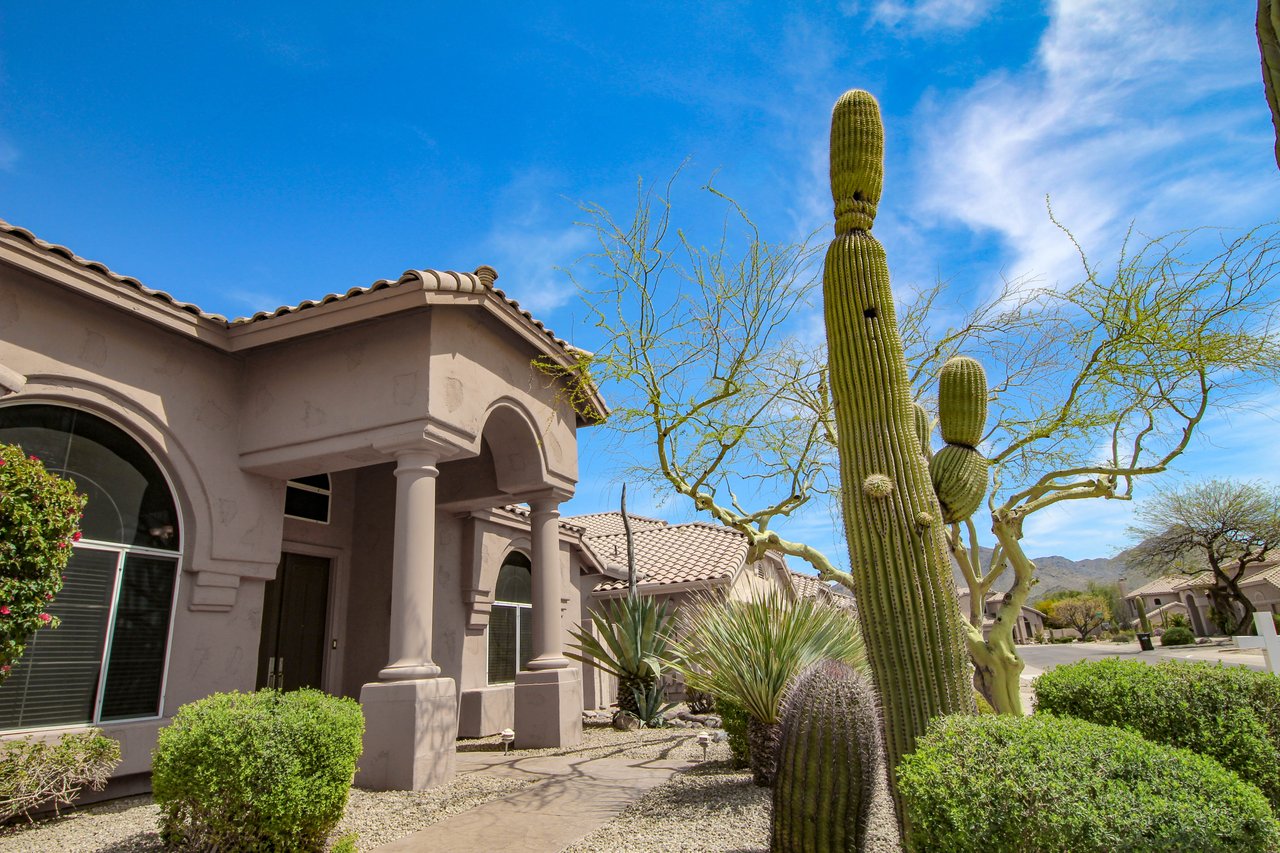
In practical terms, that means you will often see homes with four-sided architecture, stepped rooflines on sloped lots, garages turned away from the street or set back, and a shaded front courtyard or porch. These details help luxury homes feel more integrated, more private, and more consistent with the desert setting.
A desert-sensitive vision
The history of DC Ranch credits architect Vernon D. Swaback, the youngest apprentice to Frank Lloyd Wright, with shaping the community. His approach emphasized an orchestration of natural materials, which helps explain the lasting use of native stone, drought-tolerant planting, and streets that follow the natural landforms.
For you as a buyer or seller, this matters because the most appealing homes in DC Ranch usually do not fight the site. They work with it. That connection between architecture and landscape is part of what gives the community its long-term luxury identity.
Country Club style in DC Ranch
Country Club Village is one of the clearest places to see DC Ranch’s ranch-inspired and regional design vocabulary. Official style references for this village include Western Regional Farm House, Ranch House, and traditional Spanish Eclectic, along with Pueblo, Prairie, and contemporary interpretations of Western Regional, Prairie, and Pueblo styles.
If you are touring homes here, you may notice broad rooflines, grounded forms, and facades that feel warm rather than flashy. The luxury is often in the restraint. Materials, scale, and outdoor connection tend to do more of the visual work than ornament alone.
What buyers often notice
In Country Club, many homes balance comfort with architectural discipline. You may see softer Southwestern forms, ranch-inspired exteriors, and contemporary details that still feel rooted in the neighborhood rather than imported from another market.
This makes the village especially appealing if you want a refined home with a strong sense of place. For sellers, it also means updates tend to feel strongest when they preserve that original desert-regional character.
Desert Camp’s broader design mix
Desert Camp is one of the original DC Ranch villages and includes single-family homes, attached patio homes, condominiums, and townhomes. Rather than one single signature style, this village expresses the community’s broader desert-regional design language across several housing formats.
That mix can be helpful if you want the DC Ranch aesthetic in a wider range of home types. It also means buyers should look closely at how each property handles materials, entry sequence, landscaping, and exterior form, since those details often carry the architectural identity.
Desert Parks and everyday elegance
Desert Parks includes custom and non-custom single-family homes, attached homes, and luxury apartments. The listed architectural styles here are Spanish Eclectic, Western Regional Ranch, and Craftsman Bungalow.
The village was also designed with walkability and shared outdoor use in mind, including shade, open areas, play structures, and low-density lighting. That planning approach gives the architecture a slightly more connected, neighborhood-oriented feel while still staying true to DC Ranch’s overall design standards.
Styles you are likely to see
Spanish Eclectic homes may show more texture and traditional character. Western Regional Ranch homes often feel low-slung and relaxed, while Craftsman Bungalow influences can bring more visible detailing and a strong relationship between porch, roofline, and facade.
For buyers, Desert Parks can offer variety without losing consistency. For sellers, curb appeal here often benefits from clean maintenance, coherent landscaping, and exterior choices that support the original village style.
Silverleaf’s estate architecture
Silverleaf is the most formal estate enclave within DC Ranch. Official descriptions point to Spanish and Mediterranean Revival Estate architecture, formal estate gardens, significant open space, golf-course lots, hillside lots, and expansive valley views.
This is where DC Ranch architecture often becomes grander in scale and more formal in presentation. You may see stronger estate massing, more structured landscape design, and a polished Mediterranean influence that still sits within the broader desert context.
What defines the look
In Silverleaf, luxury often shows up through proportion, arrival, and site presence. The homes are not only large. They are typically designed to feel composed, with architecture and outdoor space working together.
If you are buying in this part of DC Ranch, it helps to look beyond finishes alone. Lot orientation, relationship to open space, and how well the architecture fits the land can all shape long-term appeal.
Understanding desert contemporary
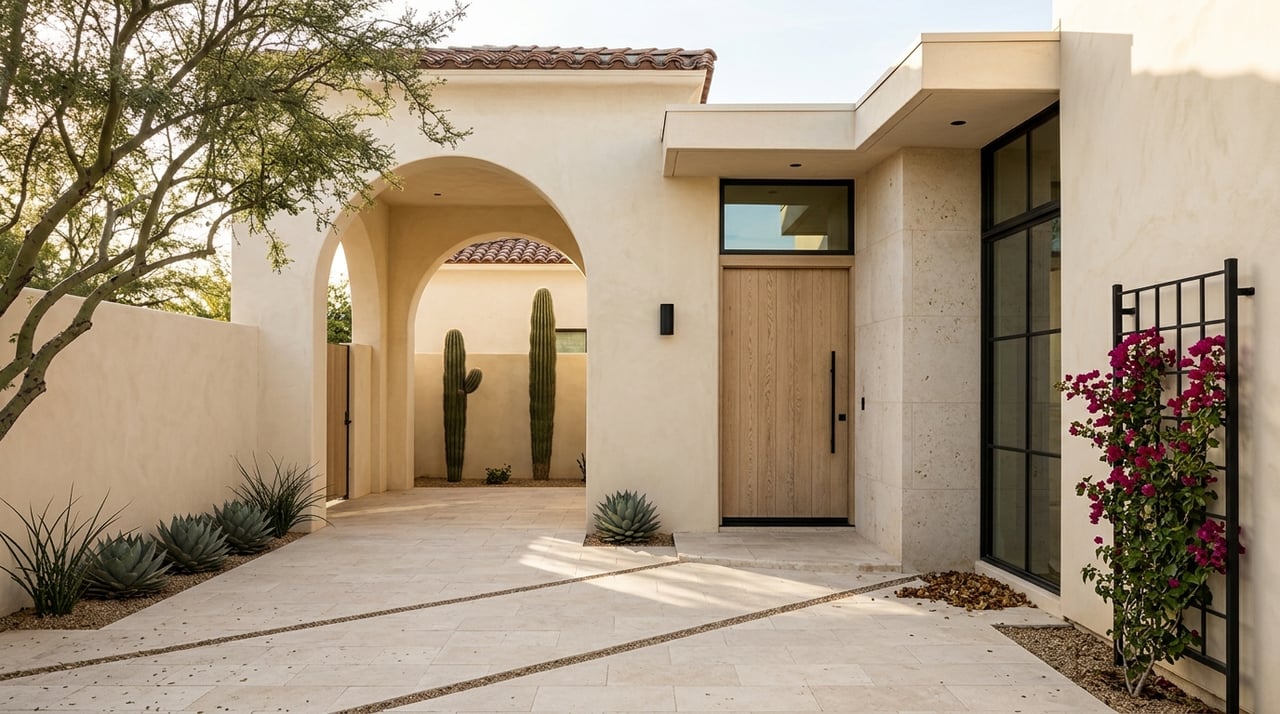
You will often hear the term desert contemporary in the market, but in DC Ranch that phrase is best treated as shorthand. The community’s own materials are more precise, referring instead to contemporary interpretations of Western Regional, Prairie, and Pueblo styles.
That distinction matters because a home may look modern without stepping outside the community’s architectural vocabulary. In other words, contemporary design in DC Ranch is usually expected to remain tied to native materials, desert-compatible forms, and the larger neighborhood context.
Materials and landscape shape the experience
In DC Ranch, architecture is not separate from landscape. Community standards require desert-sensitive landscape choices, including desert pavement in Desert Camp, Country Club, and certain Silverleaf neighborhoods, along with neighborhood-specific plant palettes and lighting that complements the architecture.
The standards also discourage landscape decisions that disrupt the natural look of the community. This is one reason well-designed outdoor spaces in DC Ranch tend to feel calm, cohesive, and appropriate to the setting rather than overly styled.
Why site integration matters
Historical planning materials describe DC Ranch as an orchestration of natural materials, native stone, drought-tolerant planting, and pathways aligned with views and topography. Low stone walls and landscape continuity across lots help tie homes to the desert rather than isolate them from it.
For sellers, this often means exterior improvements are most successful when they respect the original palette and the natural setting. For buyers, it is a reminder that the value of a home here often comes from the full composition, not just the interior design.
What buyers should consider
If you are buying in DC Ranch, style preference is only part of the decision. It is also important to consider village fit, lot placement, and how closely the home aligns with the community’s design language.
DC Ranch requires design review for new construction and major modifications. The builder process includes massing review, preliminary review, and final review through the Covenant Commission, so exterior form, materials, and landscape compatibility can all affect future plans for a property.
Smart questions to ask
When evaluating a home, consider questions like these:
- Does the architecture feel consistent with the village?
- Have exterior changes stayed true to the original design language?
- Does the landscape complement the home and surrounding streetscape?
- If you plan to renovate, will your vision likely fit the community review process?
These are practical questions, but they are also strategic ones. In a design-driven community, architectural fit can influence both enjoyment and resale appeal.
What sellers should keep in mind
For sellers, the most marketable homes in DC Ranch are often the ones that preserve the original design language while updating interiors and outdoor living areas in a thoughtful way. Buyers may see a range of expression across the community, especially where properties have changed over time, but homes that still read as desert-regional, well-scaled, and landscape-integrated tend to align most closely with DC Ranch’s stated design values.
That does not mean every home should look the same. It means presentation matters most when it highlights authenticity, proportion, and a clear connection between the house and its setting.
Why local guidance matters
In a community like DC Ranch, luxury is not defined by one trend. It is defined by architectural coherence, material quality, and how well a home belongs to its environment. Whether you are purchasing a refined ranch-inspired property, a Spanish Eclectic residence, or a formal Mediterranean estate, understanding those distinctions can help you make better decisions.
If you are considering a purchase or preparing a home for sale in DC Ranch, working with an advisor who understands design, positioning, and North Scottsdale’s luxury micro-markets can make the process more precise and more effective. To discuss your goals privately, connect with Nadine De Luca.
FAQs
What architectural styles define luxury homes in DC Ranch?
- DC Ranch is known for styles such as Western Regional Farm House, Ranch House, Spanish Eclectic, Pueblo, Prairie, Craftsman Bungalow, and Spanish or Mediterranean Revival Estate architecture, depending on the village.
What architectural style is most common in Silverleaf at DC Ranch?
- Silverleaf is most closely associated with Spanish and Mediterranean Revival Estate architecture, along with more formal estate gardens and larger-scale homesites.
What does desert contemporary mean in DC Ranch?
- In DC Ranch, desert contemporary is best understood as market shorthand for contemporary interpretations of Western Regional, Prairie, or Pueblo styles that still use native materials and desert-compatible design.
Why do luxury homes in DC Ranch feel visually consistent?
- The community follows design standards that guide style, rooflines, garage placement, front courtyards or porches, materials, and landscape compatibility, which helps create a cohesive look.
What should buyers know about remodeling a home in DC Ranch?
- New construction and major modifications are subject to design review, including massing, preliminary, and final review through the Covenant Commission, so exterior changes should be evaluated with the community standards in mind.
What makes a DC Ranch home more appealing to buyers?
- Homes that preserve the community’s desert-regional design language, feel well-scaled on the lot, and integrate architecture with landscaping often align most closely with buyer expectations in DC Ranch.