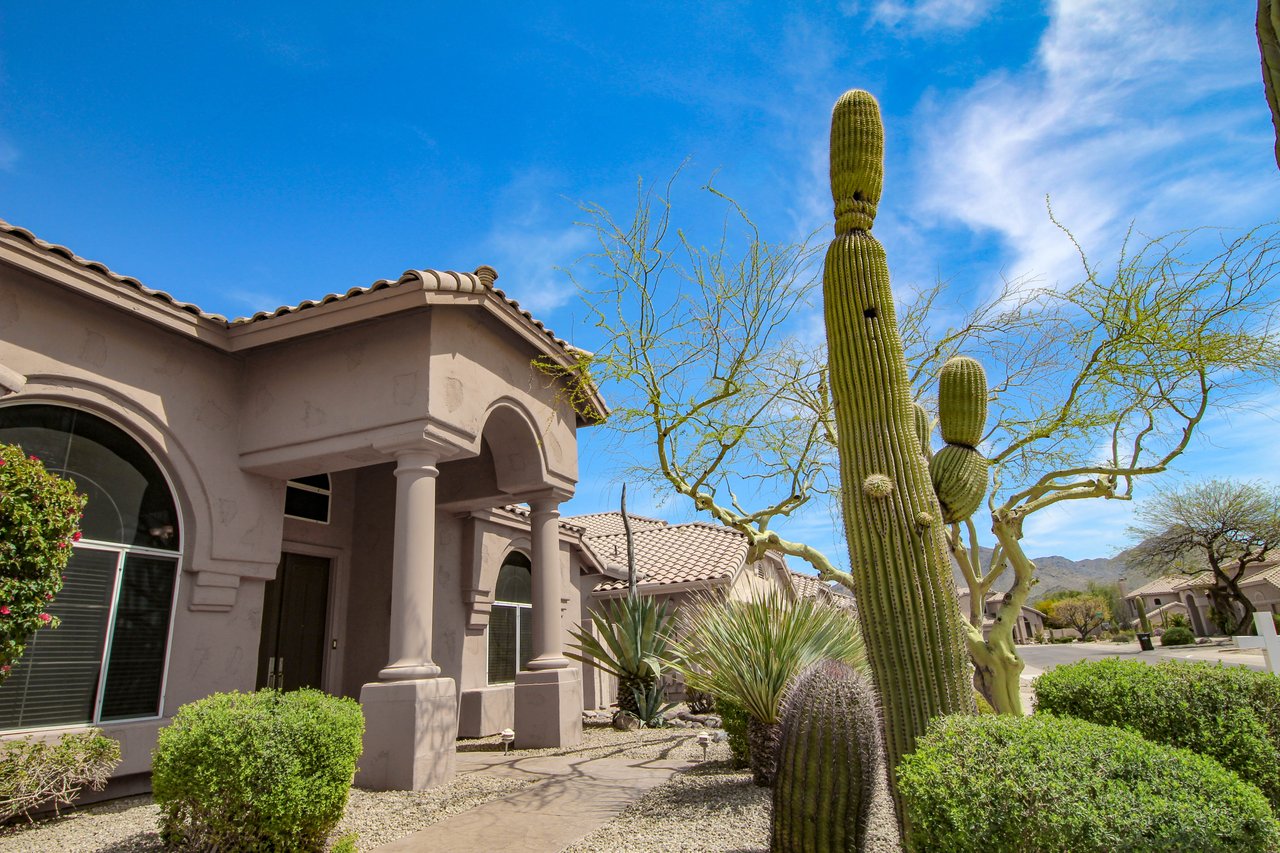
A buyer under contract on a home in McDowell Mountain Ranch last spring got a call from her inspector two days before the option period closed. The tile roof looked immaculate from the driveway. Inside the attic, the felt underneath those tiles had gone brittle enough to crumble at the touch. The home was built in 2001. The roof had never been touched.
That call is becoming a familiar one in this neighborhood, and it points to something worth understanding before you write an offer or set a list price here. Most of McDowell Mountain Ranch was built inside a narrow six-year window, a detail that can help buyers and sellers put a home’s system history in context.
Twenty-Six Neighborhoods, One Birth Certificate
Construction in McDowell Mountain Ranch began in the mid-1990s and the bulk of the community, roughly 4,000 homes across 26 neighborhoods still called by their original parcel names, among them Parcel S and Parcel X, went up between 1998 and 2003. The community's own site describes it as developed in the 1990s and early 2000s across 3,200 acres, and that compressed build-out means many homes may reach similar maintenance stages around the same time.
A community built over thirty years accumulates housing stock at every stage of its lifecycle at any given moment. A community built in six years does the opposite. It ages as a unit. When the components inside a typical desert home reach the end of their functional life, they reach it in McDowell Mountain Ranch on roughly the same calendar, not because every homeowner is negligent, but because every home started the clock at nearly the same time.
That matters right now because the homes from that build-out are between 23 and 28 years old in 2026. That is not an age at which finishes typically fail. It is precisely the age at which three specific systems do.
The Roof That Passes the Eye Test and Fails the Ladder Test
Concrete and clay tile in Arizona routinely lasts 40 to 50 years. The tile and underlayment serve different functions: the underlayment is the layer that keeps water out and has a shorter service life in the desert. Industry guidance on Arizona tile roofs puts underlayment replacement at every 15 to 20 years, with most roofs requiring major underlayment work by year 20 to 30.
A home built in 1999 or 2000 is 25 to 27 years old this year. If the underlayment is original, which it is in a large share of first-generation homes across the Valley, it has already run past the point where roofers expect it to hold. The tiles will look exactly as they did the day they were laid. The evidence of failure, when it appears, shows up as a stain on a ceiling months after the actual damage began.
The fix, when a roof reaches this point, is not usually a full tear-off. Roofers can lift the existing tile, replace the underlayment, and reset the same tiles, which protects the home without the cost of new material. That option only exists if someone catches the problem before water reaches the framing.
Two More Systems Running the Same Clock
The roof is not the only original component reaching its limit at the same time, and it is worth seeing the pattern rather than treating each system as an isolated repair.
| System | Typical desert lifespan | What "looks fine" can hide |
|---|---|---|
| Tile roof underlayment | 15 to 25 years | Tiles show no visible wear while the waterproof layer underneath has already failed |
| HVAC compressor | 10 to 15 years | The unit still runs but is nearing the point where a major repair costs more than replacement |
| Pool plaster surface | 7 to 12 years (15 to 25 for Pebble Tec) | Water still looks clear while the surface stains, etches, and roughens underneath |
Arizona's cooling season runs longer and harder than almost anywhere else in the country, and that workload shows up in equipment age. HVAC systems here typically last 10 to 15 years rather than the 15 to 20 years quoted nationally, and a full replacement in 2026 runs $5,200 to $14,000 depending on system size and efficiency. A unit installed when a McDowell Mountain Ranch home was new is not approaching the end of its life. In most cases it has already passed it and been replaced at least once, or it is overdue.
Pools follow the same math on a different timeline. Standard plaster in this climate lasts 7 to 12 years before it needs resurfacing, while a Pebble Tec finish can run 15 to 25 years. A Scottsdale pool renovation company puts most local resurfacing cycles at every 10 to 15 years. In a neighborhood where a backyard pool is close to standard, a surface that still holds water is not the same thing as a surface that is still sound.
None of these systems fail on the same day. But when a home was built in a six-year window and none of the three has been documented as replaced, a buyer is not looking at one unknown. They are looking at three, stacked on top of each other, all clustered around the same age.
What This Looks Like in Current Listings
The evidence of this pattern is already visible in the way homes here are being marketed. Recent listings in the neighborhood lead with lines like "newer roof (2019)" and "HVAC replacement" as headline features, not afterthoughts, on homes originally built two decades earlier. One recently renovated home in Sweetwater Ranch Estates carried a full documented overhaul: smooth-textured walls and ceilings, new hard-surface counters, a reconfigured kitchen island, and travertine deck work. Another, an extensively upgraded home inside Graythorn, a private gated enclave of just 27 homes near the main community, marketed its renovation specifics as the primary selling point over its original construction year.
As of mid-August 2026, MLS data showed roughly a dozen homes actively listed in McDowell Mountain Ranch, with a median list price near $1.575 million and an average of 86 days on market. That average can give buyers time to request documentation. Sellers can prepare it before the first showing.
If You're Selling
The instinct in a boutique market is to let a beautifully staged interior speak for itself. In McDowell Mountain Ranch, that instinct leaves value on the table if the systems behind the walls have already been addressed and nobody says so.
If you replaced the roof underlayment, kept permit records, or resurfaced the pool in the last decade, that documentation belongs in the listing, not in a drawer waiting for an inspector to ask. A dated invoice for a 2019 HVAC replacement is worth more to a buyer's confidence than another photograph of the kitchen. If any of the three systems is still original, it may be useful to arrange a professional assessment before listing and share the findings with prospective buyers.
If You're Buying
A build year in the high 1990s or early 2000s is not a reason to walk away from a home in this neighborhood. It is a reason to ask a more specific question than "how old is the house."
Ask when the roof was last lifted and the underlayment replaced, not just whether there have been leaks. Ask for the HVAC installation date, not just whether it currently cools the house. Ask when the pool was last resurfaced and with what finish, since plaster and Pebble Tec carry very different remaining lifespans even if the water looks the same. If dates are unavailable, note that as part of the information you consider in negotiation.
A Few Questions Worth Asking Directly
Does a 2001 build year mean all three systems need replacing right now? Not automatically. Some homeowners have already replaced one or more systems, sometimes more than once. The build year tells you the clock started decades ago. It does not tell you where each system stands today, which is why documentation matters more than the number on the listing sheet.
If the roof tiles are original but the underlayment was replaced, does that reset the roof's age? Effectively, yes for waterproofing purposes. A lift-and-relay job puts new underlayment under the existing tiles, which restores the functional lifespan of the roof's protective layer even though the tiles themselves were never new.
Should this change what I offer on a home? It should change what you ask for before you set a number. A home with documented recent replacements across all three systems and one with none of that documentation are not the same asset, even at an identical list price and identical curb appeal.
McDowell Mountain Ranch remains one of North Scottsdale's most established communities precisely because its homes were built to last. The systems inside them were not built to last forever, and in a neighborhood where many homes were built around the same time, that distinction is useful context when evaluating a home.
If you are weighing a sale or a purchase in McDowell Mountain Ranch and want a clear read on what a specific home's systems and documentation actually support, Nadine De Luca offers a private consultation built around exactly this kind of detail. Let's Connect: Request a Private Consultation.